Making a Québec agricultural lot profitable: 7 legal income paths in 2026 (CPTAQ framework)
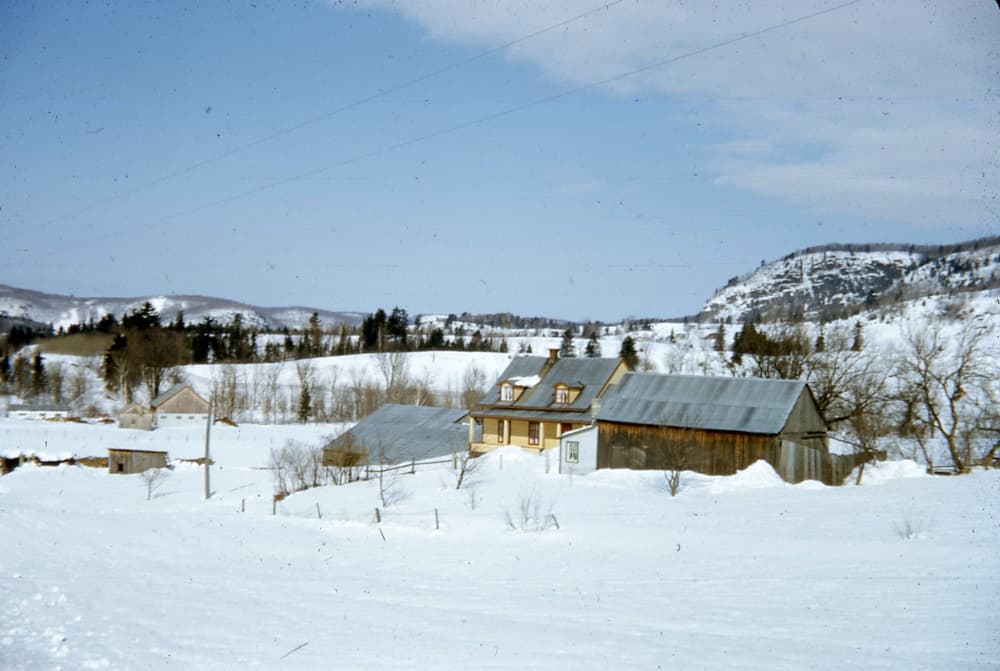
Seven legal, CPTAQ-safe ways to generate income from land in Québec's protected agricultural zone. Typical revenue per acre, what's forbidden, and the dezoning process when conversion is the right call.
Owning agricultural land in Québec means owning a constrained asset: the Commission de protection du territoire agricole du Québec (CPTAQ, established under RLRQ P-41.1) forbids most non-agricultural uses, and an owner who builds a chalet, subdivides the lot or runs a business without prior authorization is exposed to sanctions ranging from forced restoration to fines. The good news: there are seven legal, tax-efficient ways to generate income on agricultural land, plus a regulated process to apply for dezoning when it's the right strategy. This guide lists each option with typical 2026 Laurentides revenue per acre.
The CPTAQ constraint first
Before searching for ways to profit from the lot, you have to understand what you're legally allowed to do. Three structuring principles frame any exploitation of land in the protected agricultural zone:
- Strictly agricultural uses (cultivation, livestock, silviculture, maple sugar production) are permitted as of right on the entire lot, without prior authorization.
- Any non-agricultural use (residential, commercial, industrial, recreational) requires CPTAQ authorization — including building a residence for yourself if the lot doesn't already have acquired residential rights.
- Selling the lot to a non-farmer is unrestricted, but the UPA (Union des producteurs agricoles) has a right of first refusal in certain configurations — verify before listing publicly.
The 7 legal income paths
Ranked by operational simplicity (simplest first). Revenue figures are 2024-2026 observations on Laurentides lots and are not Heritage commitments — verify with your accountant.
- Lease for hay or grain cultivation — a neighboring farmer leases your lot to grow hay or grain. No effort on your part, no infrastructure to build. Typical Laurentides revenue: CAD $50-$150/acre/yr depending on soil quality and access. Standard 5-year renewable lease. No CPTAQ authorization required.
- Sugar bush leasing (acericulture) — if the lot contains an exploitable maple stand (~100 taps or more), a sugar maker can lease the tapping rights. Typical revenue: $0.25-$0.75/tap/yr, so $250-$750/yr for 1,000 taps. 3- to 10-year contract. No CPTAQ authorization required for acericulture on an existing maple stand.
- Pasture or livestock boarding — a rancher leases your lot to graze cattle, sheep or horses. Typical revenue: $40-$120/acre/yr for cattle, up to $200/month/horse for full boarding if you provide infrastructure (shelter, water). No CPTAQ authorization required.
- Forest plantation with reforestation programs — plant commercial species (black spruce, larch, hybrid poplar) and benefit from provincial programs (Programme d'aide à la mise en valeur des forêts privées). Deferred 15-40 year revenue but immediate subsidies up to $1,500-$3,000/ha planted. Recognized forest-producer tax status lets you deduct expenses against other income.
- Light agritourism (sugar shack, U-pick, farm market) — requires prior CPTAQ authorization for the complementary use, but remains accessible if the activity stays subordinate to agriculture. Typical revenue: $5,000-$30,000/yr for a small seasonal sugar shack, more for high-volume U-pick. CPTAQ authorization timeline: 6 to 12 months.
- Agricultural camping / glamping (in compatible MRCs) — a few Laurentides MRCs (notably MRC des Pays-d'en-Haut and MRC d'Argenteuil) have adopted by-laws permitting rustic camping or glamping on agricultural land under specific conditions. Typical revenue: $10,000-$40,000/yr for 5-10 sites in the summer season. Requires written municipal confirmation AND CPTAQ authorization.
- Sale with reserved usufruct — if the lot has market value and you don't need full ownership, sell bare ownership to a farmer or to your family while keeping usufruct (see our dismemberment guide). Revenue is immediate (capitalized sale price), you keep the rental income from options 1-6, and estate transfer is pre-arranged without further tax trigger.
What is strictly forbidden (and triggers sanctions)
- Building a rental chalet or residence without acquired rights and without prior CPTAQ authorization — sanction: forced demolition and fine of $500-$50,000.
- Subdividing the lot to sell residential parcels — non-agricultural subdivision is forbidden without authorization.
- Running a non-agricultural commercial activity (warehouse, commercial garage, regular event rental) — primary commercial use is incompatible with the agricultural vocation.
- Backfilling, draining or modifying terrain without environmental authorization — particularly in mapped wetlands (MELCC).
- Assuming a non-agricultural use is legal because it has existed for a long time — without a formal acquired-rights certificate issued by CPTAQ, the use can be challenged.
What if you want out of the agricultural zone?
A dezoning application (technically an « exclusion request » or « request for use other than agriculture ») is possible but difficult. CPTAQ's approval rate for individual requests not motivated by an agricultural need has been below 15% since 2020. Standard procedure:
- Verify with the municipality that the intended project would be compatible with the planning scheme and municipal zoning by-law — without favorable municipal opinion, CPTAQ rejects outright.
- Prepare a file demonstrating that no suitable space exists outside the agricultural zone for the intended project (mandatory test under article 62 of the Act).
- Submit the application to CPTAQ with analysis fees of $305 for a use request and $555 for an exclusion request (2026).
- Processing time: 12 to 24 months on average. A public hearing is usually convened.
- If refused, appeal possible before the Tribunal administratif du Québec — additional 12 to 18 month delay.
In practice: if the goal is to build a rental chalet, it is almost always faster and more certain to buy land already zoned for cottage or residential use — see our inventory of Laurentides land with confirmed Airbnb zoning.
Official sources
- Act respecting the preservation of agricultural land and activities — RLRQ P-41.1
- CPTAQ — forms, fees and policies (cptaq.gouv.qc.ca)
- UPA — first-refusal rights and acquisition conditions (upa.qc.ca)
- Private Forest Enhancement Aid Program — MRNF (mffp.gouv.qc.ca)
- Provincial Agricultural Operations Regulation — RLRQ Q-2, r. 26
- MAPAQ — guide « Starting an agritourism business » (mapaq.gouv.qc.ca)
How to make a Québec agricultural lot profitable within the CPTAQ framework
The 7 legal ways to generate income from land in Québec's protected agricultural zone, ranked by operational simplicity. Typical 2026 Laurentides revenue per acre. None requires building a residence.
Lease for hay or grain cultivation
A neighboring farmer leases your lot to cultivate. No effort, no infrastructure. Typical Laurentides revenue: $50-$150/acre/yr. 5-year renewable lease. No CPTAQ authorization required.
Lease the sugar bush (acericulture)
If the lot contains a maple stand with ~100 taps or more, a sugar maker leases the tapping rights. Typical revenue: $0.25-$0.75/tap/yr, so $250-$750/yr for 1,000 taps. 3- to 10-year contract. No authorization required.
Offer pasture or livestock boarding
A rancher leases the lot for cattle, sheep or horses. Typical revenue: $40-$120/acre/yr for cattle, up to $200/month/horse for full boarding if you provide shelter and water. No CPTAQ authorization required.
Plant a commercial forest
Plant commercial species (spruce, larch, hybrid poplar) and qualify for the Private Forest Enhancement Aid Program. Immediate subsidies $1,500-$3,000/ha planted. Deferred 15-40 year revenue. Forest-producer tax status deductible.
Launch light agritourism (sugar shack, U-pick)
Prior CPTAQ authorization required for the complementary use, but accessible if the activity stays subordinate to agriculture. Typical revenue: $5,000-$30,000/yr for a small seasonal sugar shack. Authorization timeline: 6 to 12 months.
Agricultural camping or glamping (compatible MRCs)
A few Laurentides MRCs (Pays-d'en-Haut, Argenteuil) allow rustic camping or glamping on agricultural land under conditions. Typical revenue: $10,000-$40,000/yr for 5-10 sites in season. Requires written municipal confirmation AND CPTAQ authorization.
Sell bare ownership with reserved usufruct
Sell bare ownership to a farmer or your family while keeping usufruct (see the dismemberment guide). Immediate revenue (capitalized price) + retained rental income from options 1-6 + pre-arranged estate transfer with no further tax trigger.
Frequently asked questions
Can I build a chalet on an agricultural lot in Québec?
No, unless the lot already has acquired residential rights (certificate issued by CPTAQ) or you obtain prior CPTAQ authorization for use other than agriculture. The approval rate for this type of individual application has been below 15% since 2020. Building without authorization risks forced demolition and a $500-$50,000 fine. For a rental chalet project, it is almost always faster and more certain to buy land already zoned for cottage or residential use.
Source: Act respecting the preservation of agricultural land (CQLR P-41.1) (LégisQuébec) · CPTAQ — authorization for non-agricultural use (Commission de protection du territoire agricole du Québec)
How much can you earn renting agricultural land in the Laurentides?
Depending on the operating mode: $50-$150/acre/yr for hay or grain cultivation (the simplest, no equipment required), $40-$120/acre/yr for cattle pasture, $250-$750/yr for 1,000 leased maple taps, $5,000-$30,000/yr for a seasonal sugar shack, $10,000-$40,000/yr for 5-10 glamping sites in a compatible MRC. For a typical 20-acre Laurentides lot, the realistic passive agricultural rental income is between $1,000 and $3,000/yr with no effort.
What is CPTAQ and what does it control?
The Commission de protection du territoire agricole du Québec (CPTAQ) is the government body established under Act RLRQ P-41.1 that controls all non-agricultural uses of lots in the protected agricultural zone. It authorizes or refuses: residential construction, businesses, subdivisions, complementary use additions (agritourism, B&Bs), and applications to exclude land from the agricultural zone. Strictly agricultural uses (cultivation, livestock, silviculture, acericulture) are permitted as of right without its intervention.
Source: CPTAQ official site (Gouvernement du Québec)
Can I sell my agricultural land to anyone?
Yes, selling an agricultural lot to a non-farmer is unrestricted — with two caveats. (1) The UPA (Union des producteurs agricoles) has a right of first refusal in certain configurations, notably when the lot borders an active farm: before listing publicly, verify whether UPA notification is required. (2) The buyer will inherit the CPTAQ constraints, so market price is generally lower than for an equivalent buildable lot — typically 30-60% less. A sale with dismemberment (bare ownership to family, usufruct retained) is often more tax-efficient than a direct sale.
How do I dezone agricultural land in Québec?
The standard procedure has five steps: (1) obtain favorable municipal opinion (without municipal support, CPTAQ rejects outright); (2) prepare a file proving no suitable space exists outside the agricultural zone (mandatory article 62 test); (3) submit the application to CPTAQ with $305 (use) or $555 (exclusion) fees in 2026; (4) wait 12 to 24 months of processing with a public hearing; (5) if refused, appeal to the Tribunal administratif du Québec (additional 12-18 months). Approval rate for individual requests not motivated by agricultural need: below 15% since 2020.
Source: CPTAQ — authorization and exclusion application forms (Commission de protection du territoire agricole du Québec) · Quebec Administrative Tribunal — Land & Environment section (Tribunal administratif du Québec)