Pre-purchase land due diligence in the Laurentides: 7-step checklist
Short answer — Pre-purchase land due diligence in the Laurentides is a 7-step checklist to complete before submitting an offer — budget CAD $2,000 to $4,500, timeline 30 to 60 days within the conditional window.
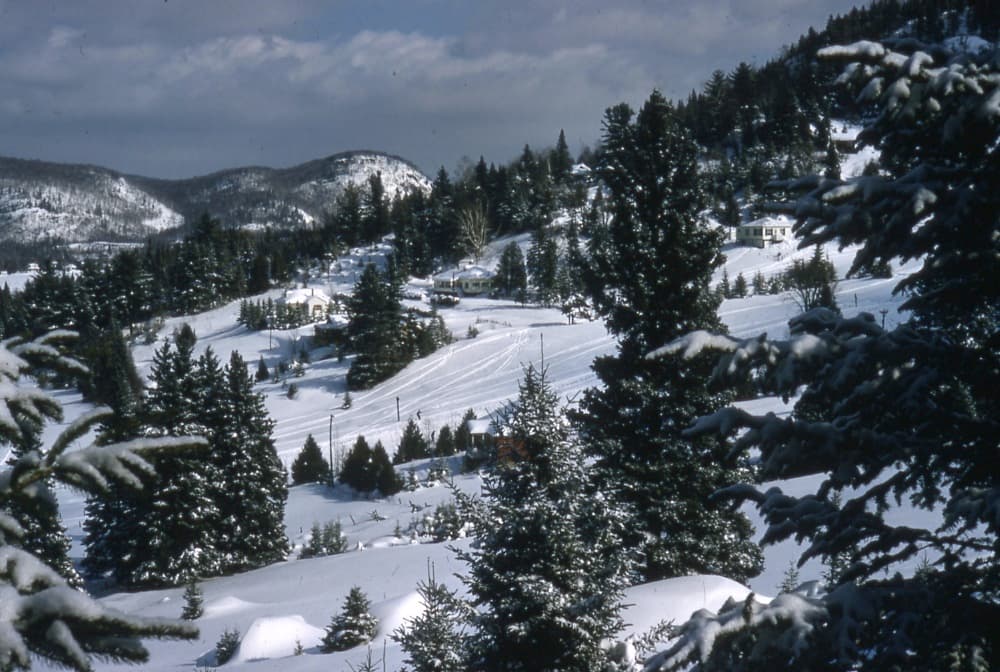
The complete checklist to run BEFORE signing an offer on Laurentides land: zoning, land registry, services, soil tests, environmental constraints, property taxes, notarial clauses. With 2026 costs and timelines.
Buying land in the Laurentides without due diligence is signing blind for CAD $100,000-$300,000. A lot that looks beautiful in photos may be in a flood plain, in a protected agricultural zone (CPTAQ), without potable-water access, or off-limits to short-term rental by municipal by-law — and the buyer only discovers this after closing, too late to back out. This 7-step checklist covers what a serious buyer must verify before submitting an offer, based on the standard procedure used by Laurentides-active notaries and land surveyors in 2026.
Why a pre-purchase study matters
The standard Québec offer includes a due-diligence contingency (typically 30 to 60 days). That window is when the pre-purchase study runs: it confirms the lot can serve the intended use, is free of major encumbrances, and that hidden costs (services, taxes, constraints) stay within budget. Without it, the buyer waives the contingency and is locked in — a lot that looked like a $150,000 bargain can cost an extra $50,000 in unplanned remediation.
How do you run a 7-step pre-purchase due diligence?
Step order matters: zoning first (without a permitted use, nothing else matters), then title, then services, then environment, then taxes, then drafting the conditional offer.
- Verify municipal zoning — call the planning department of the municipality (Sainte-Adèle, Morin-Heights, Saint-Sauveur, Mont-Tremblant, etc.) and request the zoning by-law applicable to the lot plus the list of permitted uses. For an Airbnb chalet, require written confirmation that « tourist residence » (per the provincial Act RLRQ E-14.2) is expressly authorized. If the word « tourism » doesn't appear in the use grid, it's a no. Cost: free. Timeline: 1 to 5 business days.
- Search the Québec Land Register — through your notary or directly on registrefoncier.gouv.qc.ca, verify: chain of title (who owned the lot and how it was transferred), recorded servitudes (power lines, rights of way, view rights), mortgages and liens, and unpaid tax notices. A lot burdened with a right of way can lose 30-50% of its use value. Cost: $5 per document or ~$250 via the notary for a full analysis. Timeline: 1 to 3 days.
- Verify services and accessibility — confirm with Hydro-Québec the cost to connect from the nearest line (ranges from $1,500 to $25,000 depending on distance), ask the municipality whether the access road is public and maintained year-round or private (private road = winter maintenance on you, ~$3,000-$6,000/yr), and verify cell and internet coverage (Bell, Starlink, Vidéotron). Cost: free. Timeline: 5 to 10 days.
- Run soil and percolation tests — engage an environmental technologist (OACETT member) to: test the soil's hydraulic conductivity (percolation test required by Regulation Q-2, r. 22 for the septic system), evaluate bedrock depth and soil stability for foundations, and confirm artesian well feasibility. Without a favorable percolation test, you cannot build — some lots require Bionest or Écoflo septic systems ($5,000-$15,000 surcharge). Cost: $800-$1,800. Timeline: 10 to 20 days.
- Verify environmental constraints — consult the provincial flood-zone map (cehq.gouv.qc.ca/zones-inond), the MELCC wetlands cartography, the threatened-species registry (CDPNQ), and the lot's CPTAQ status (if in an agricultural zone, any construction is forbidden without prior authorization). A lot in a 0-20 year flood zone is essentially unbuildable. Cost: free. Timeline: 2 to 5 days.
- Calculate projected property taxes — ask the municipality for the current municipal valuation and the tax rate (residential + school). For a $600,000 chalet in Sainte-Adèle, plan for about $3,800/yr in municipal and school taxes. Compare the municipal valuation to the asking price: an asking price more than 30% above the municipal valuation can signal a lot overpriced for the zone.
- Draft the conditional offer with your broker or notary — the offer must include conditional clauses for: (a) verification of zoning and permitted uses, (b) receipt of a valid location certificate, (c) a favorable percolation test, (d) absence of blocking environmental constraints (flood zones, wetlands, CPTAQ), and (e) bank financing. Standard window: 30 to 60 days to complete checks. Without these clauses, you are bound even if the study reveals a problem.
How much does a complete due-diligence package cost in the Laurentides?
For a standard residential or recreational lot, the realistic due-diligence budget sits between CAD $2,000 and $4,500.
- Notarial title search in the Land Register: $250-$500
- Percolation test (OACETT technologist): $800-$1,800
- Water tests (existing well or feasibility): $200-$400
- Location certificate (if required before the offer): $800-$1,500
- Municipal fees (zoning + tax roll extracts): $50-$150
- Your OACIQ broker fee: generally included in the sale commission
What pitfalls should you avoid during due diligence?
- Trusting the general zoning grid without written confirmation for the SPECIFIC lot — zones can change from one side of the street to the other.
- Skipping the percolation test because « the neighbor has a working well » — every lot has its own soil, and a parcel can be unbuildable 50 m from a conforming one.
- Forgetting CPTAQ status on a rural lot — even an uncultivated lot can be in a protected agricultural zone if agricultural use remains legally possible.
- Assuming a road is maintained year-round because it's paved — many private Laurentides roads are not plowed in winter and the buyer inherits the snow-removal contract ($3,000-$6,000/yr).
- Not writing the Airbnb-zoning clause into the offer — without this explicit condition, you lose recourse if the municipality refuses the tourist-residence use after closing.
- Confusing location certificate with land survey — the location certificate describes the lot's current state; the survey (technical description) is required to subdivide or contest a boundary.
Official sources
- Civil Code of Québec — articles 977 to 1003 (titles and real servitudes)
- Regulation Q-2, r. 22 — wastewater disposal and treatment for isolated dwellings
- Act respecting the preservation of agricultural land and activities — RLRQ P-41.1 (CPTAQ)
- Tourist Accommodation Establishments Act — RLRQ E-14.2
- Québec Land Register — registrefoncier.gouv.qc.ca
- Flood-zone cartography — Government of Québec, cehq.gouv.qc.ca/zones-inond
- OACIQ — guide « Buying land in Québec »
- Chambre des notaires du Québec — pre-purchase real-estate guide
How to run pre-purchase due diligence before buying land in the Laurentides
Standard 7-step procedure used by Laurentides-active notaries and land surveyors to verify a lot before submitting an offer. Total budget: CAD $2,000 to $4,500. Timeline: 30 to 60 days within the offer's due-diligence window.
Verify municipal zoning
Call the municipality's planning department and request the zoning by-law and list of permitted uses on the lot. For an Airbnb chalet, require written confirmation that « tourist residence » (Act RLRQ E-14.2) is expressly authorized. Cost: free. Timeline: 1 to 5 business days.
Search the Québec Land Register
Through your notary or on registrefoncier.gouv.qc.ca, verify the chain of title, servitudes (power lines, rights of way), mortgages and liens, and unpaid tax notices. Cost: $5 per document or ~$250 for a full notarial analysis. Timeline: 1 to 3 days.
Verify services and accessibility
Confirm with Hydro-Québec the connection cost ($1,500 to $25,000 depending on distance), ask the municipality whether the road is public and year-round maintained or private, and verify cell and internet coverage (Bell, Starlink, Vidéotron). Cost: free. Timeline: 5 to 10 days.
Run soil and percolation tests
Engage an environmental technologist (OACETT member) for the percolation test required by Regulation Q-2, r. 22 (septic), bedrock depth evaluation, and artesian well feasibility. Without a favorable test, you cannot build. Cost: $800 to $1,800. Timeline: 10 to 20 days.
Verify environmental constraints
Consult the flood-zone map (cehq.gouv.qc.ca/zones-inond), the MELCC wetlands cartography, the threatened-species registry (CDPNQ), and the lot's CPTAQ status. A lot in a 0-20 year flood zone is essentially unbuildable. Cost: free. Timeline: 2 to 5 days.
Calculate projected property taxes
Ask the municipality for the current municipal valuation and the tax rate (residential + school). For a $600,000 chalet in Sainte-Adèle, plan for about $3,800/yr. An asking price more than 30% above the municipal valuation can signal an overpriced lot.
Draft the conditional offer
The offer must include conditional clauses for zoning verification, a valid location certificate, a favorable percolation test, absence of blocking environmental constraints, and bank financing. Standard window: 30 to 60 days to complete checks.
Frequently asked questions
What is a Laurentides land pre-purchase study?
A Laurentides land pre-purchase study is the due-diligence checklist to complete before signing an offer: municipal zoning (tourist residence / Airbnb), Land Register, percolation (Q-2 r.22), services, environmental constraints (flood, CPTAQ), property taxes, then a conditional offer. Typical budget CAD $2,000–$4,500, timeline 30–60 days.
How long does pre-purchase due diligence take for Laurentides land?
Plan for 30 to 60 days, which matches the standard due-diligence window of a Québec purchase offer. The parallelizable steps (zoning, land register, environmental constraints) take 1 to 5 days each; the percolation test is the critical path (10 to 20 days for booking + report). For a lot in winter, add 2 to 4 weeks: frozen soil blocks the percolation test until thaw.
How much does a complete pre-purchase due diligence cost in the Laurentides?
Between CAD $2,000 and $4,500 for a standard residential or recreational lot. Breakdown: notarial title search ($250-$500), percolation test by an OACETT technologist ($800-$1,800), water tests ($200-$400), location certificate if required before the offer ($800-$1,500), municipal fees ($50-$150). For a complex lot (potential flood zone, wetland, difficult access), plan for up to $7,000.
Source: Regulation Q-2, r. 22 — wastewater disposal (percolation test required) (LégisQuébec) · OACETT — Quebec professional technologists (OACETT)
What to verify first before buying land for an Airbnb chalet?
Municipal zoning — without written confirmation that « tourist residence » is permitted on the lot, no other step is worth doing. In Québec, several Laurentides municipalities (Saint-Sauveur, Mont-Tremblant, Morin-Heights) have restricted or forbidden short-term rental in certain zones since 2022, and the zoning grid can change from one side of the street to the other. Ask for email confirmation from the planning department, citing the official lot number — not just the civic address.
Do you need a notary for a Québec land pre-purchase study?
For title-related steps (Land Register search, servitudes analysis, charges verification), yes: a notary is mandatory to draft and publish any real-estate transfer in Québec, and their pre-purchase analysis costs about $250-$500 and avoids very expensive post-signing litigation. For other steps (zoning, environmental constraints, percolation, services), an OACIQ broker or specialized professionals (technologist, surveyor) are sufficient. Best practice: hire the notary as soon as the conditional offer is accepted, not just at closing.
Source: Chambre des notaires du Québec — real-estate deeds and Land Registry publication (Chambre des notaires du Québec) · OACIQ — Québec real-estate brokerage self-regulatory body (OACIQ)
How do I know if a Québec lot is in a flood zone?
Consult the official flood-zone mapping on cehq.gouv.qc.ca/zones-inond — you can search by municipality, lot, or coordinates. Zones are classified as 0-20 years (flood recurrence every 20 years, essentially unbuildable) and 20-100 years (buildable with strict restrictions and immunization requirements). Also check with the municipal planning department, which holds up-to-date local cartography including overflow corridors not yet reflected on the provincial map.
Source: Centre d'expertise hydrique du Québec — flood-zone mapping (Centre d'expertise hydrique du Québec)